Department for the Regulation and Control of Magical Creatures
Fantastic Beasts and Where to Find ThemThe Department for the Regulation and Control of Magical Creatures is the Ministry of Magic’s principal administrative body for magical creatures, responsible for their regulation and control as well as a wide range of species-specific needs. Its work brings law, classification, conservation, public safety, and the protection of wizarding secrecy into the same bureaucratic frame; the book presents that remit not as a single rule, but as a changing system of departments, negotiated boundaries, and practical interventions.
Origins and institutional structure
The Department’s present three-part structure follows a long history of disputes about which magical creatures qualify as “beings” with legal rights and a voice in magical governance, and which are classed as “beasts.” Early attempts to draw the line were crude. In the fourteenth century, Burdock Muldoon, Chief of the Wizards’ Council, proposed that every member of the magical community who walked on two legs should be included in the Council. The test elevated bodily form over other claims to standing and produced an unworkable gathering: the resulting participants included trolls, leprechauns, and fairies, while centaurs and merpeople were excluded because they did not attend on two legs.
Muldoon’s successor, Madame Elfrida Clagg, tried a different criterion, defining “beings” as those able to speak human language. This, too, failed to settle membership. The merpeople were excluded because, above water, they could converse only in Mermish. The successive definitions show that the administrative categories the Department inherits were not simply discovered in nature: they emerged from contested attempts to decide who could take part in governance and on what terms.
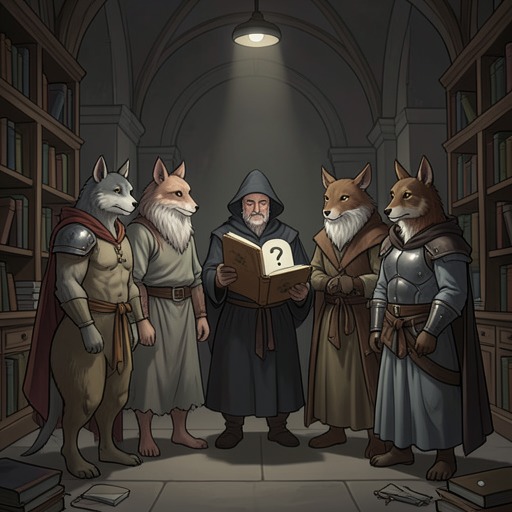
In 1811, the newly appointed Minister for Magic, Grogan Stump, introduced definitions that most of the magical community accepted. The resulting arrangement divided the Department for the Regulation and Control of Magical Creatures into the Beast Division, the Being Division, and the Spirit Division. It also placed creatures with humanoid appearance, including trolls and gnomes, firmly in the beast category. Ghosts were treated as a special case: they objected that calling them “beings” was insensitive when they were plainly “has-beens,” prompting the creation of the Spirit Division. The structure thus reflects compromise and humor as well as an official taxonomy.
Jurisdiction, autonomy, and classification
The Department’s work sits beneath an international duty to govern magical creatures. In 1750, Clause 73 was inserted into the International Code of Wizarding Secrecy, requiring each wizarding governing body to take responsibility for the concealment, care, and control of the magical beasts, beings, and spirits within its jurisdiction. This provides a formal basis for the Ministry’s remit: local administration is part of a wider system of wizarding obligations, not merely an internal departmental concern.
Yet official classification does not guarantee that a creature or group accepts the status assigned to it. Centaurs objected to being placed among the same “beings” as hags and vampires and declared that they would manage their affairs separately from wizards. Merpeople made the same request a year later. The Ministry accepted both demands reluctantly. Their refusal establishes a limit to the Department’s jurisdiction in practice: the state may create offices and categories, but its authority is also shaped by negotiated separation and the agency of those it seeks to classify.
That tension is made concrete by the Centaur Liaison Office, which exists within the Beast Division of the Department for the Regulation and Control of Magical Creatures even though no centaur has ever used it. Within the department, being sent to the Centaur Office has become an in-joke meaning that the employee in question is shortly to be fired. The office therefore has a double life: formally, it marks an administrative channel for relations with centaurs; in practice, it records the failure of that channel and becomes a workplace euphemism. The contrast shows how the Department’s official structures can persist even when the people they are meant to serve reject them.
Workload and methods of control
The Department is identified as the Ministry’s second-largest department, with only the Department of Mysteries offered as a possible exception. Its scale follows from the number and varied needs of the species under its care. A recurring practical problem is that some creatures, deliberately or accidentally, remain conspicuous to Muggles. Their visibility generates substantial work for the Department, linking creature management directly to the maintenance of secrecy.
The Department’s tools range from routine regulation to exceptional containment. In extreme cases, including the Quintaped, entire areas have been made unplottable—that is, impossible to chart on maps. Such measures protect a space by removing it from ordinary geographical knowledge, rather than simply trying to conceal an individual animal. Alongside these habitat protections, the book describes rules and controls on the selling and breeding of magical creatures. The Department keeps strict watch on the trade in fantastic beasts, including trade involving young and eggs, and the 1965 Ban on Experimental Breeding made the creation of new species illegal.
When concealment fails and a Muggle sees what they should not, memory alteration is presented as a repair measure. The creature’s owner may perform a Memory Charm; in severe cases of Muggle notice, the Ministry may send a team of trained Obliviators. These responses illustrate the different scales of enforcement: an individual owner can address an incident, but serious breaches call for a centrally deployed team. Together with habitat protections and trade controls, memory intervention shows that the Department’s role extends beyond classifying creatures to managing the effects of their presence on human observers and the secrecy regime.
Specialists, expertise, and conservation
The Department’s divisions and specialist work depend on practical knowledge of creatures, not only on legal definitions. After graduating from Hogwarts School of Witchcraft and Wizardry, Newt Scamander joined the Department and spent two years at the Office for House-Elf Relocation before transferring to the Beast Division. His exceptional knowledge of magical animals brought rapid promotion. His career places expertise at the centre of the Department’s operations: administration requires people able to distinguish among the needs and risks of different species, rather than applying a single response indiscriminately.
Scamander was almost solely responsible for creating the Werewolf Register in 1947, but he said that he was proudest of the Ban on Experimental Breeding, passed in 1965. That measure made the production of new species illegal and connected the work of a specialist in magical creatures to a general prohibition on breeding experimentation. The book also describes the Department as keeping strict watch on creature trade. These controls address not only adult animals but their young and eggs, situating regulation at the point where commercial exploitation and propagation might affect populations.
The Department’s work is not reducible to containment. The book notes protected species and dedicated habitats alongside danger and secrecy concerns. The Antipodean Opaleye’s native territory, for example, has become the world’s most important dragon reservation, where wizards of all nationalities study a variety of dragons at close range. At the other end of the conservation story, the Golden Snidget is described as an extremely rare, protected bird. These cases frame protection as more than removing creatures from view: it can involve preserving a species or place and enabling study, even as such measures remain part of a wider system of magical governance.
Institutional significance
The Department embodies the unsettled boundary between care and control. Its responsibilities include the concealment and care mandated by international law, the regulation of trade and breeding, the handling of visible creatures, and the classification of beings whose own claims may contradict official labels. Some interventions protect habitats or limit harmful exploitation; others answer the political priority of preventing Muggles from learning about the magical community. The same institution therefore administers both creature welfare and the secrecy interests of wizarding society.
Its history and working practices also keep the limits of administration in view. The three divisions established under Grogan Stump offer a durable structure, yet centaurs and merpeople have chosen to manage their affairs separately; a liaison office remains unused, while its name circulates as a joke about dismissal. At the same time, the scale of the department and the practical need for specialists, protections, and enforcement show why the Ministry cannot simply leave magical creatures outside its systems. The Department’s significance lies in that unresolved task: governing a diverse living world through categories and rules while confronting the fact that neither creatures nor their circumstances always fit them.